

Understanding Fujitsu fault codes flashing lights can be incredibly helpful when your air conditioner encounters issues. These codes serve as important indicators of potential problems, enabling you to diagnose and troubleshoot on time.
Read on as I will be discussing the three main reasons behind fault codes and sharing insights on understanding the table. So, without further ado, let’s get started!
Fujitsu Fault Codes Flashing Lights
In the past, troubleshooting electronic devices without clear indicators was a real challenge. Fortunately, modern technology has made it easier, with devices featuring screens that use blinking lights to communicate issues. This also applies to Fujitsu air conditioners, which employ flashing lights on their screens to signal potential problems.
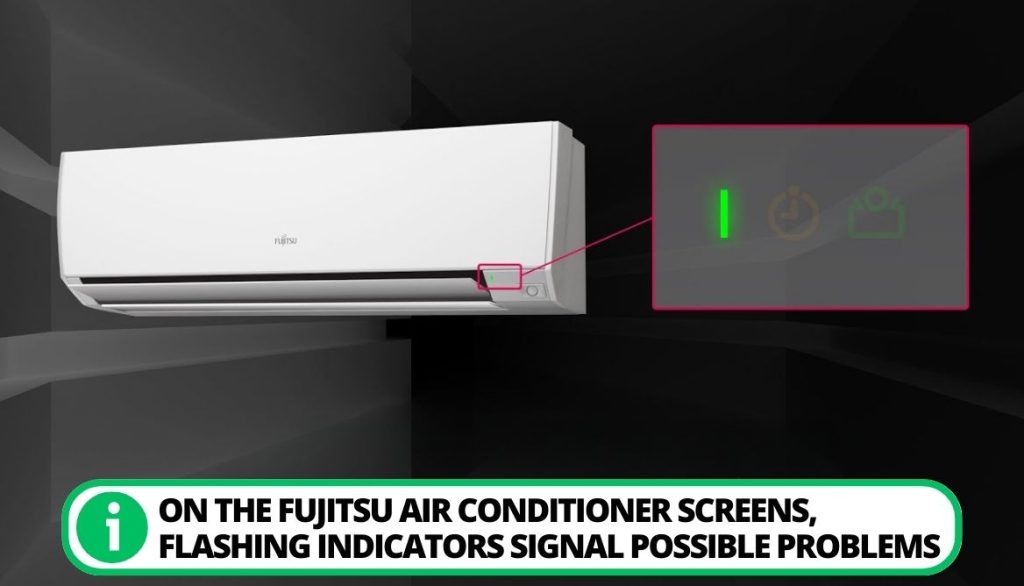
Knowing about these flashing lights proves highly beneficial, as it eliminates the need for a thorough inspection of every air conditioner component. Now, before we head on to different fault codes, let’s shed light on 3 major issues and their fixes.
1. Issue with Indoor Hose Sensor
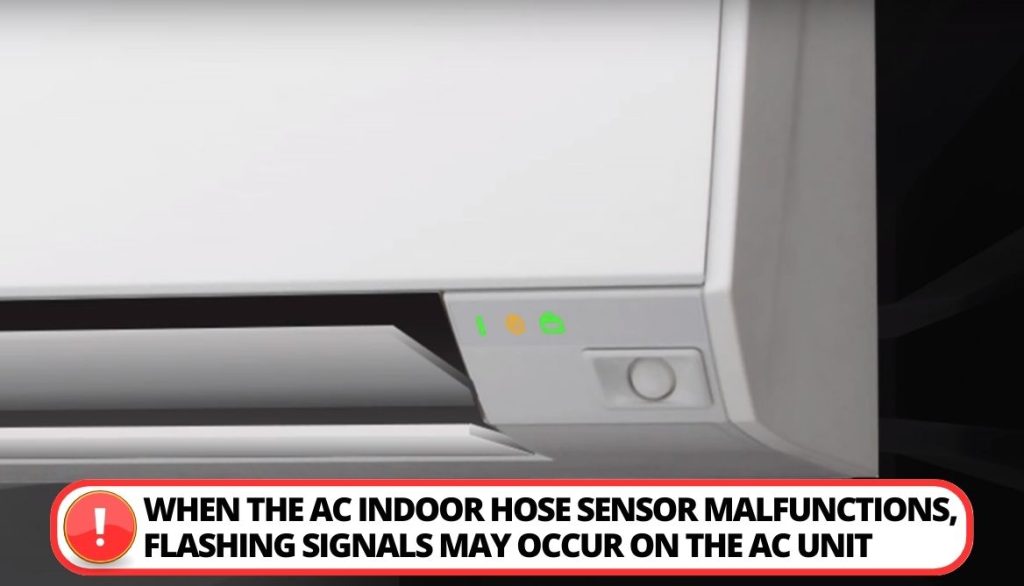
When your air conditioner’s interior hose sensor malfunctions, it can trigger specific blinking patterns on the AC unit. Observing two consecutive red light blinks followed by three green light blinks leads to the following steps to take:
[su_list icon=”icon: chevron-circle-right” icon_color=”#00cf77″]
- Check all the hoses connected to your AC and make sure they are free of any dirt or debris. Cleaning them is important to keep your AC working well.
- It’s also essential to make sure that there are no blockages in the pipes connected to your AC unit. Clearing any clogs will help your AC cool effectively.
- After ensuring the hoses and pipes are clean and clear, check the temperature settings. During summertime or when you want cooling mode, the temperature should be between 0°C and 10°C.
- Likewise, in wintertime for the heating mode, the temperature should be set between 25°C and 65°C. [/su_list]
2. Trouble With the Outdoor Air Sensor
When you see the red lights on your unit flash three times and the green light blinks four times, it’s a sign that something is wrong with the outdoor air sensor. This sensor might not be working because of the wrong suction temperature.

[su_list icon=”icon: chevron-circle-right” icon_color=”#00cf77″]
- Normally, this temperature should be between 35 degrees Fahrenheit and 65 degrees Fahrenheit.
- If it goes higher than 65 degrees Fahrenheit or lower than 35 degrees Fahrenheit, the outdoor air sensor fails and can start misbehaving. [/su_list]
[su_note note_color=”#FFBFBF”] Important! In case you do not know how to adjust the suction temperature or fix the outdoor sensor, it’s best not to try doing it yourself. Instead, you should get a certified professional to inspect and repair the problem for you. [/su_note]
3. Malfunctioning Indoor Air Sensor (Red and Green Light)
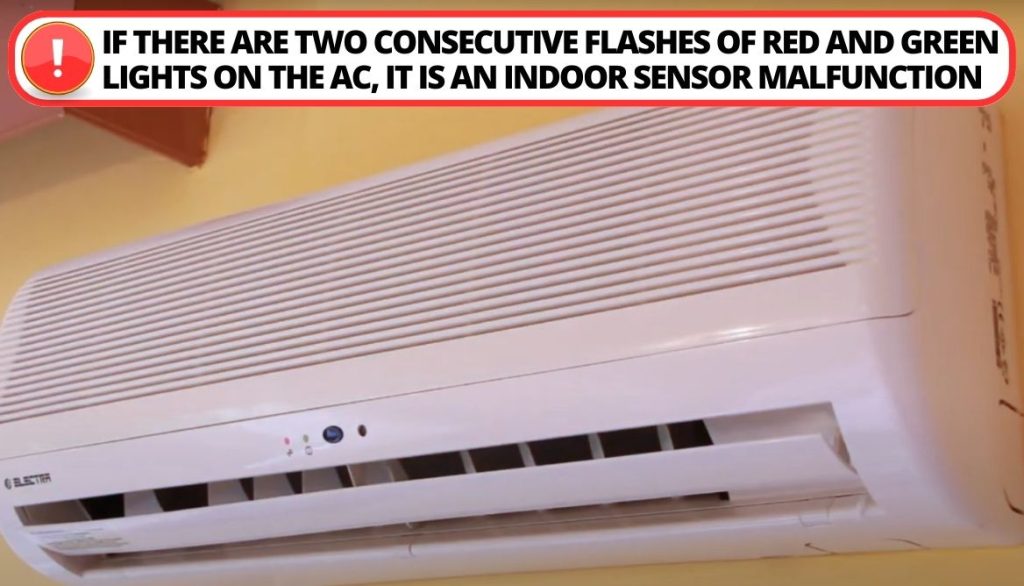
When you observe two consecutive blinks of both the red and green lights on your Fujitsu air conditioner, it signifies an issue with the internal sensor. Follow the given instructions to address these problems:
[su_list icon=”icon: chevron-circle-right” icon_color=”#00cf77″]
- Check if your air conditioner is in the test or timer mode and reset it if necessary.
- Afterward, inspect the filter of the air conditioner to check if it needs to be changed. [/su_list]
[su_note note_color=”#9ee7b3″] Note: If you don’t maintain your air conditioner by cleaning its hoses and air filters, they can get blocked. This happens when dirt and dust build up and prevent air from flowing through them. [/su_note]
An Insight Into Fujitsu Operation Indicator Lamp Codes
Let’s take a closer look at Fujitsu’s operation indicator lamp codes, which provide important information about the status of your air conditioner. These fault codes can help you understand whether everything is running smoothly or if there’s a problem that needs attention.
Sensor Light Fault Codes
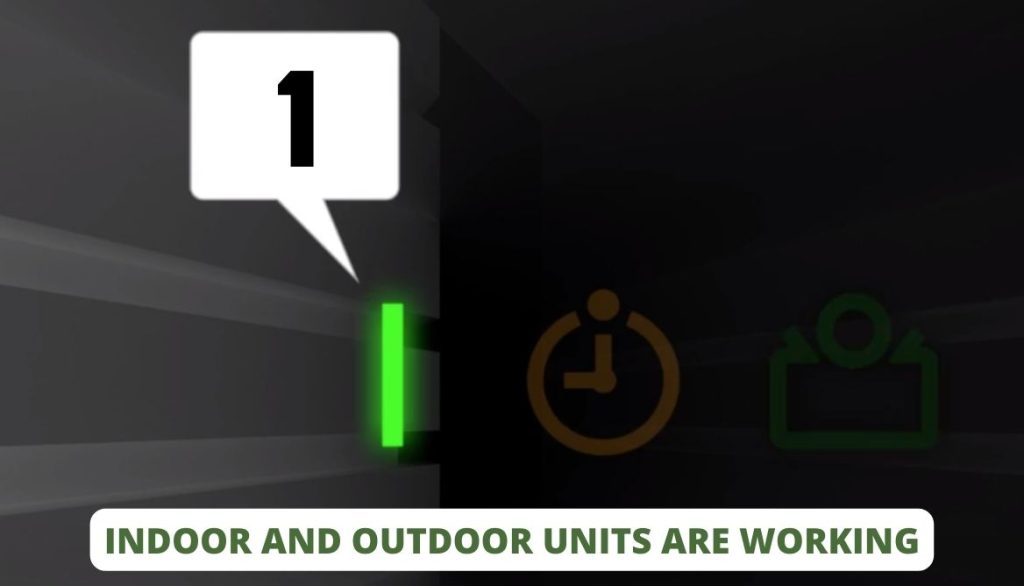
Now, moving on to the sensor light codes. These codes involve the green light sensor (GLS) and the red light sensor (RLS):
[su_list icon=”icon: check” icon_color=”#00cf77″]
- When the green light sensor blinks, it usually means both the indoor and outdoor units are working just fine. [/su_list]
[su_list icon=”icon: check” icon_color=”#00cf77″]
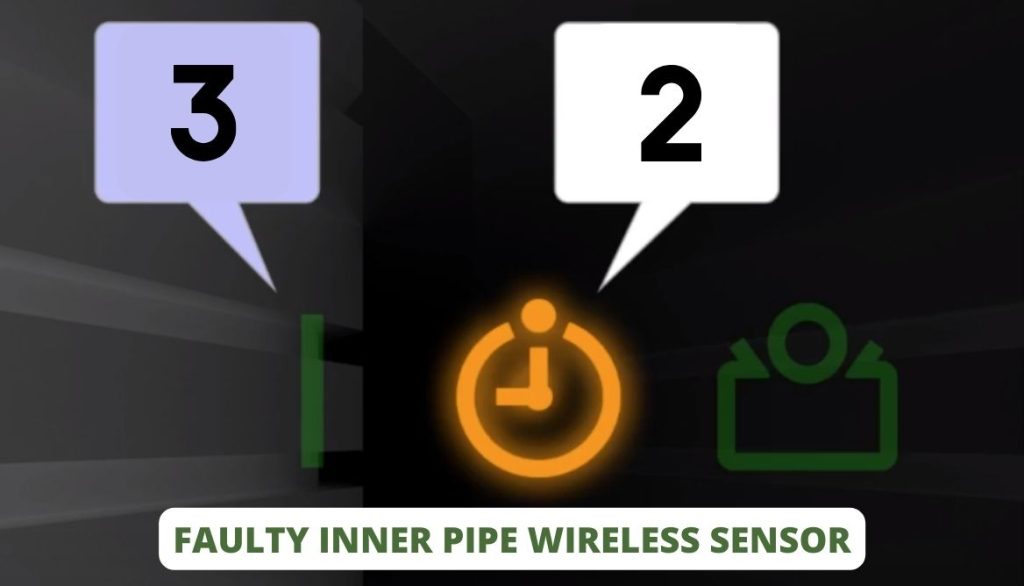
- If the RLS blinks twice and the GLS blinks three times, it indicates a problem with other wireless indoor pipe sensor fail. [/su_list]
[su_list icon=”icon: check” icon_color=”#00cf77″]
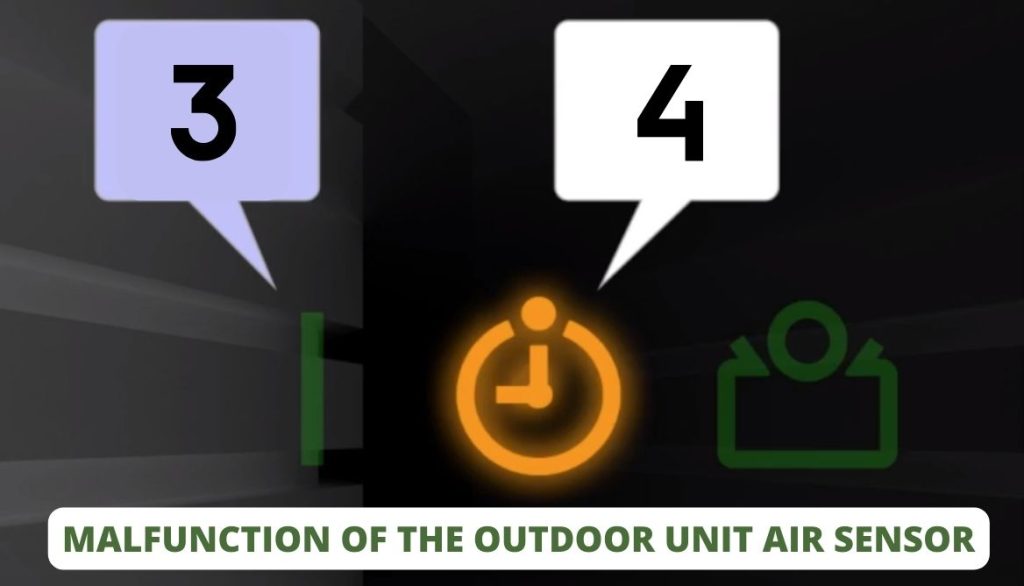
- Lastly, if the RLS blinks three times and the GLS blinks four times, this suggests an issue with the outdoor unit’s air sensor failure.
[/su_list]
These codes can help you identify specific problems with your air conditioner, making it easier to address them effectively.
LED Codes
Moving on to the LED Codes, which are another essential aspect of your Fujitsu air conditioner’s communication system. These codes use the LED lights on your unit to convey important information about its performance and any potential issues.
To help you understand about these codes in detail, I have outlined a table below:
[wptb id=3014893]For further understanding, check out this helpful video. Now that we have covered the table, let’s learn about the main culprits behind the failure of Fujitsu AC.
3 Reasons Behind Break Down of Fujitsu Air Conditioners
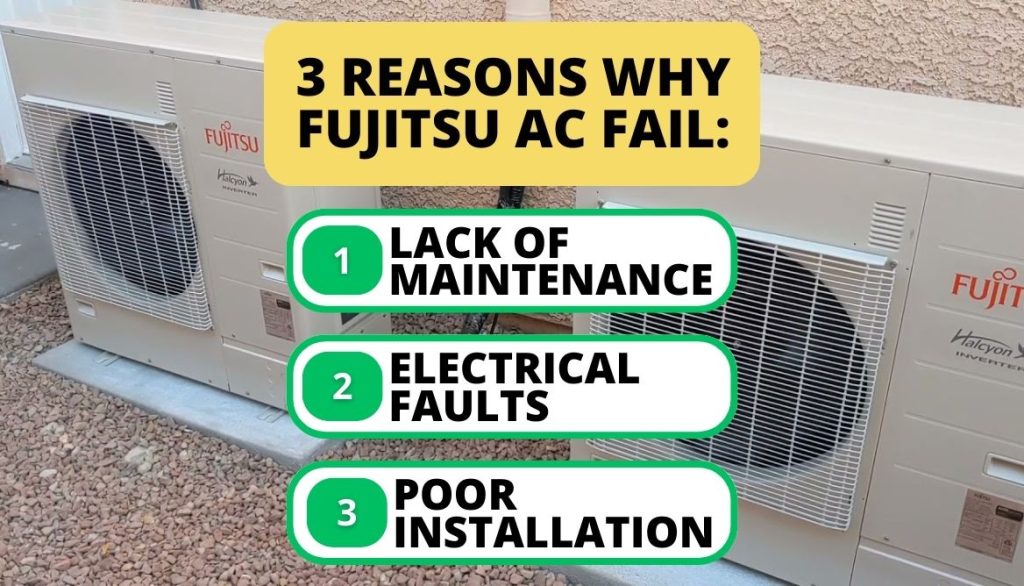
Just like any other electronic machine, Fujitsu air conditioners can sometimes stop working properly. Listed below are some reasons behind their breakdown:
[su_list icon=”icon: check” icon_color=”#00cf77″]
- Lack of Maintenance: Neglecting proper care such as cleaning filters, coils, and condenser units can result in the breakdown of the AC.
- Electrical Faults: Problems with electrical components, such as wiring, capacitors, or relays, can disrupt the AC’s operation.
- Poor Installation: If the installation is carried out incorrectly, your unit can experience different problems like reduced cooling and will eventually break down.
[/su_list]
Handy Tips for Fixing Fujitsu Indoor Unit AC Models
After all the discussion above, if you’re still having trouble with your Fujitsu AC model, here are some easy solutions to figure out and fix the issues:
[su_list icon=”icon: check” icon_color=”#00cf77″]
- Memory Retention: For memory retention in case of a power sensor failure, turn on DIP SW6 on the RC. Turning them on will lead to saving the settings.
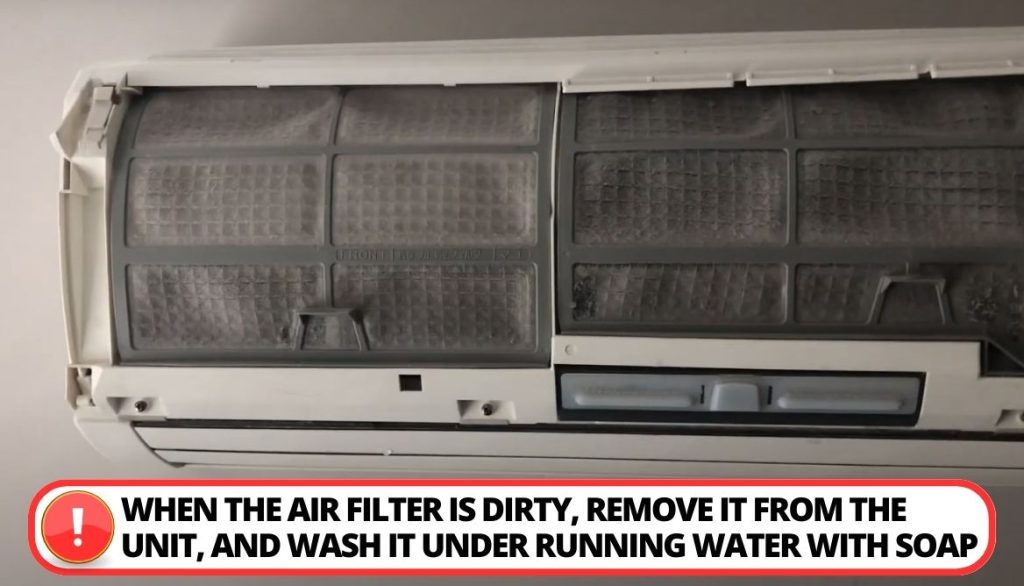
- Air Filter Cleaning: When the air filter is dirty, remove it from the unit, and wash it under running water with soap. Make sure it’s dry before putting it back.
- Remote Control Multiple Units: In case you need to remote control up to 16 units from one RC handset, turn on DIP SW3 and RC. Set each unit’s rotary switch to a unique Unit Address (0-15) in sequence.
- Auto Restart on Power Failure: To enable auto restart when there’s a power sensor fail, turn on DIP SW2-3 on the ID unit. If it’s off, the unit will restart automatically; if it’s on, you’ll need to restart it manually to avoid power failure.
- Auto Changeover: To activate auto changeover mode, turn on DIP SW5 on the RC. Turning it offsets the AC to manual mode.
- Setting RC DIP SWs: For units with a single handset, turn on DIP SW1 and turn off DIP SW2. For master units with dual handsets, turn on both DIP SW1 and DIP SW2, and turn off both slave units.
- Resetting E:EE Display: If you see the E:EE message on the display, turn the unit off and hold down both the temperature up and temperature down buttons at the same time for 3 seconds.
- Returning to Normal Mode: To go back to normal operation, simply press the temperature up and temperature down buttons together for 3 seconds.
- Testing Your AC: If you want to test how your AC is working, turn it off, and then press and hold the master and fan buttons at the same time for 3 seconds. Afterward, press the start/stop button to begin the test.
[/su_list]
FAQ
What are the flashing error codes in Fujitsu aircon?
Why is my Fujitsu operation light blinking 10 times?
What is the code EE on the Fujitsu Fault?
How do I read a Fujitsu error code?
Conclusion
The final say is that understanding Fujistu fault codes flashing lights is highly necessary to keep your indoor and outdoor unit running properly. If you face an indoor air sensor fail issue, make sure to remove any blockages in the pipe connected to the AC unit. Moreover, if there is a problem with the outdoor air sensor, try to maintain the required temperature. Other than that, refer to the fault code table or manual for a better insight into the problem.
Have you ever encountered an issue with your Fujitsu AC unit such as indoor air sensor fail and what measures did you take to resolve it? Share your answer with me in the comments below!